Juma Agro
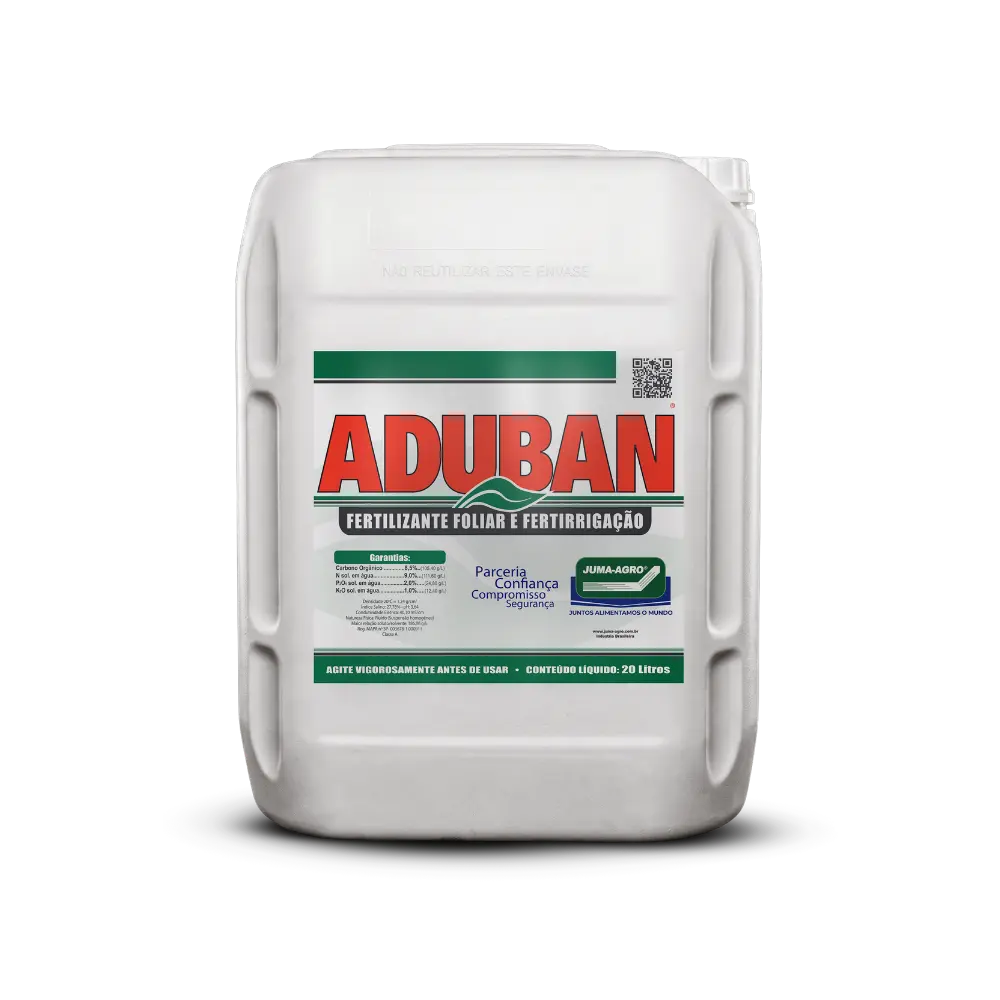
Imagem do produto Aduban
Nutrient Bioavailability

Aduban

Balanced soil and more nutrient absorption by the young plant. For soybeans, corn, coffee, and beans.

Indicated crops
Foliar
CottonRiceWheatBarleyBeanSoybeanPeaPeanutPotatoTomatoCarrotBeet
Fertigation
TomatoBell pepperStrawberryLettuceEscaroleLeafy vegetablesSquashMelonEggplantCucumberRose/OrnamentalsNurseries
Available packaging
20L
What it solves

Problems that
Aduban treats.

Where the crop suffers losses and how the product acts to reverse the situation.

Low nutrient availability

Soil with blocked nutrients due to inadequate pH or biological competition.

Fragile young plant

Seedlings with slow development due to an unbalanced soil environment.

Benefits

What Aduban
delivers in practice.

Physiological and agronomic results that appear in productivity.

Improves root environmentStimulates beneficial microorganisms for greater nutrient availability.
More efficient absorptionYoung plant with better access to nutrients from germination.
Applications

How to apply Aduban
on each crop.

Application timing according to the 2026 label.

Foliar
CottonWhen to apply: 1 application at the start of flowering, plus 3 to 4 applications at 10 to 15 day intervals.
Rice / Wheat / BarleyWhen to apply: 1 application before tillering and 1 at booting.
Bean / Soybean / Pea / PeanutWhen to apply: 1 application 25-30 days after germination, 1 before flowering and 1 at grain formation.
PotatoWhen to apply: 1 application during planting, over the seed potatoes, before closing the furrow.
Tomato / staked / groundWhen to apply: Weekly.
Carrot / Beet / Garlic / OnionWhen to apply: Start the application when reaching 10 to 15 cm in height, plus 4 to 5 applications at 7 to 10 day intervals.
Strawberry / Cucumber / Green bean / VegetablesWhen to apply: 5 to 6 applications at 7 to 10 day intervals.
Corn / SorghumWhen to apply: 1 application before plants reach 8 leaves.
Peach / Apple / Grape / Annual fruit cropsWhen to apply: 1 application post-harvest, 1 after flowering and 1 during fruit development.
CitrusWhen to apply: 1 application at pre-bloom, 1 after flowering, 1 at the "marble" stage and 1 at the "ping-pong ball" stage. Always apply mixed with micronutrients. (REVIGO®)
CoffeeWhen to apply: 1 application at pre-bloom, 1 after the "buckshot" bloom stage, 1 at grain formation and 1 at grain filling. Always apply mixed with micronutrients. (REVIGO®)
Rose / Chrysanthemum / Carnation / Gladiolus / OrnamentalsWhen to apply: Apply at 7 to 10 day intervals until flower bud formation.
FertigationUsed diluted in water.
Tomato / Bell pepperWhen to apply: 1 application after transplanting, during fruiting of the first branch, every 25 days.
StrawberryWhen to apply: 1 application after transplanting, and vegetative growth after fruiting.
Lettuce / Escarole / Leafy vegetablesWhen to apply: 1 application after transplanting, 10 to 15 days after the first treatment.
Squash / Melon / Eggplant / CucumberWhen to apply: 1 application after transplanting, during fruiting of the first branch, every 25 days.
Rose / OrnamentalsWhen to apply: 1 application after pruning, at pre-bloom of the flower buds, and 20 to 25 days after the second treatment.
NurseriesWhen to apply: 1 application at flowering and another after fruiting.
Citrus / Grape / Pear / KiwiWhen to apply: 1 application at flowering and another after fruiting.
CoffeeWhen to apply: 1 application at pre-flowering and another during fruit growth.
Soybean / Corn / BeanWhen to apply: Application in the planting furrow.

For every application, always consult an agronomist or technical adviser.

In the field

Aduban in action.

Photos of fields and real trials conducted with partner producers.

Aduban — aplicação no campo
Next step

Together we feed the world.

Talk to Juma-Agro and discover the right solution for your crop, your region, and your management.