Uneven bloom
Flowering waves on different dates spread out ripening and complicate harvest.



Coffee responds stage by stage, from pre-bloom to ripening. Juma-Agro builds the foliar program along the phenological calendar of the grove, with a defined product and rate for each window.
Lines of work that show up in the field and in the grower's income.
Critical windows where nutritional management defines crop size.
Flowering waves on different dates spread out ripening and complicate harvest.
Newly formed fruit that drops before setting is a direct production loss in the block.
Light, low-screen beans when energy and nutrition are short at peak demand.
Fruit at different stages on the same plant compromises cup quality.
A coffee plant that reaches harvest exhausted starts the next cycle weak and alternates yield.
Flowering waves on different dates spread out ripening and complicate harvest.
Newly formed fruit that drops before setting is a direct production loss in the block.
Light, low-screen beans when energy and nutrition are short at peak demand.
Fruit at different stages on the same plant compromises cup quality.
A coffee plant that reaches harvest exhausted starts the next cycle weak and alternates yield.
Flowering waves on different dates spread out ripening and complicate harvest.
Newly formed fruit that drops before setting is a direct production loss in the block.
Light, low-screen beans when energy and nutrition are short at peak demand.
Fruit at different stages on the same plant compromises cup quality.
A coffee plant that reaches harvest exhausted starts the next cycle weak and alternates yield.
Flowering waves on different dates spread out ripening and complicate harvest.
Newly formed fruit that drops before setting is a direct production loss in the block.
Light, low-screen beans when energy and nutrition are short at peak demand.
Fruit at different stages on the same plant compromises cup quality.
A coffee plant that reaches harvest exhausted starts the next cycle weak and alternates yield.
Product and rate for every window of the cycle, as in the crop's technical brochure.
When Aminosan is tank-mixed with Revigo Nitrogênio Plus, reduce the Revigo Nitrogênio Plus rate. Young coffee, after transplanting: Acorda Ultra 1.0 L/ha and Aduban 3.0 L/ha by drench or fertigation; Aminosan 300 ml/100 L of water and Revigo Zn Plus or Revigo Café 300 ml/100 L monthly; FitoFert 250 ml/100 L every 45 days.
Source: Juma-Agro brochure · Foliar nutrition suggestions for coffee
The products that appear most frequently in management with Juma-Agro.

Higher flower set and production, from pre-bloom to grain filling.

Lowers physiological oxidation and strengthens endogenous defenses.
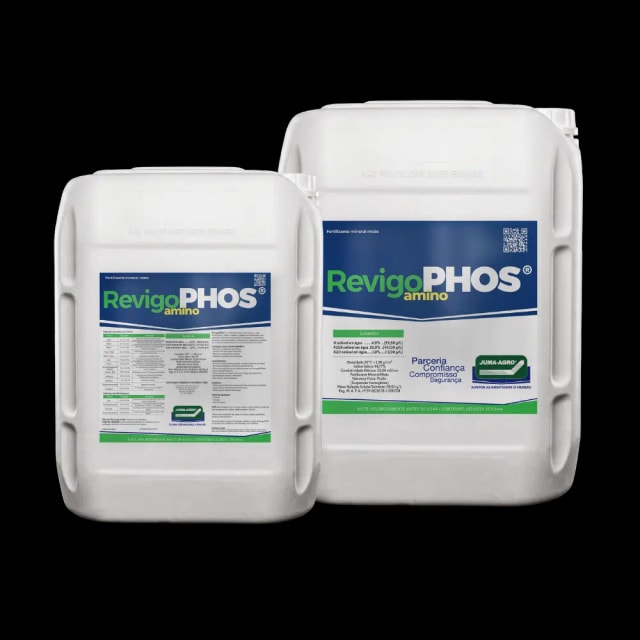
Phosphorus energy supply at pinhead and grain filling.
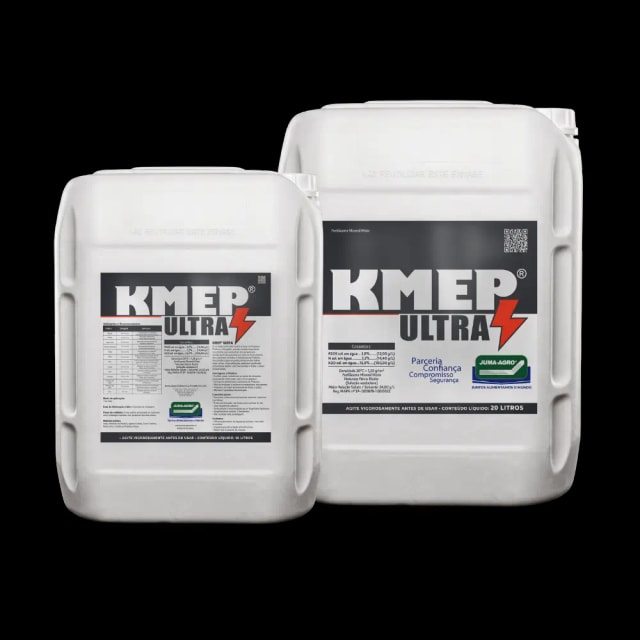
Potassium at grain filling and ripening, up to 3.0 L/ha.

Root start for young coffee, by drench or fertigation.

Conditions the root zone in young and rainfed coffee.
Talk to Juma-Agro and discover the right solution for your crop, your region, and your management.